Under-Deposit Corrosion in Ducts, Baghouses and Kiln Shells
 Edita RojasovaLast Updated: Nov 18, 2026
Under-Deposit Corrosion: Key Points
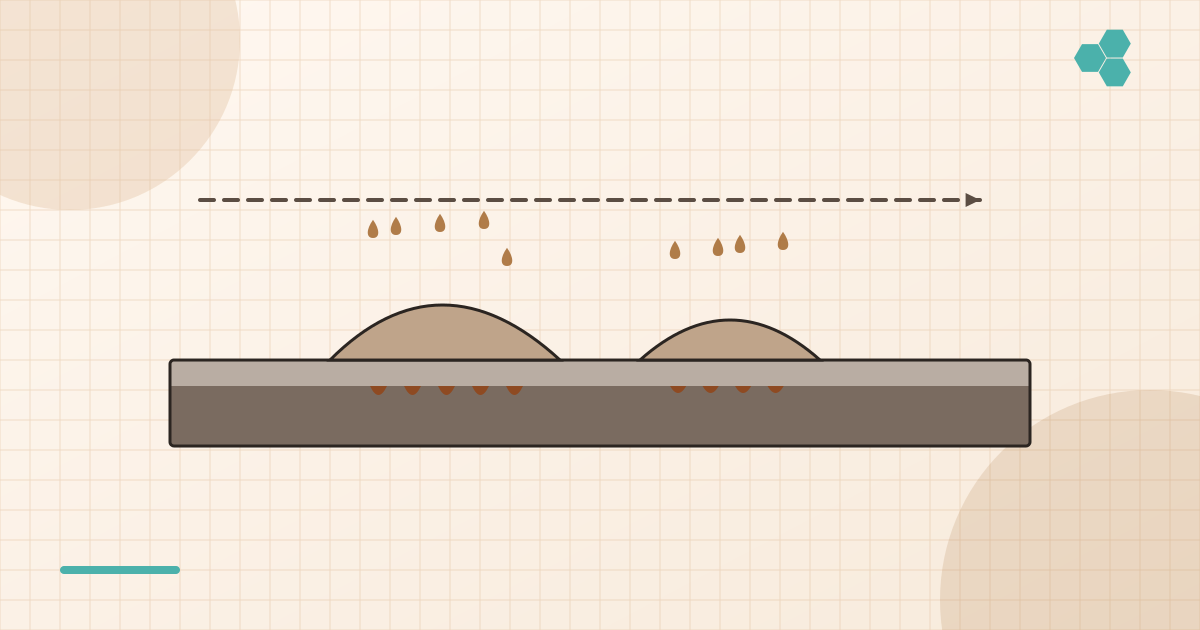
- Under-deposit corrosion is localized attack beneath retained dust, ash or salt, where the deposit holds moisture and concentrates acids and chlorides against the steel.
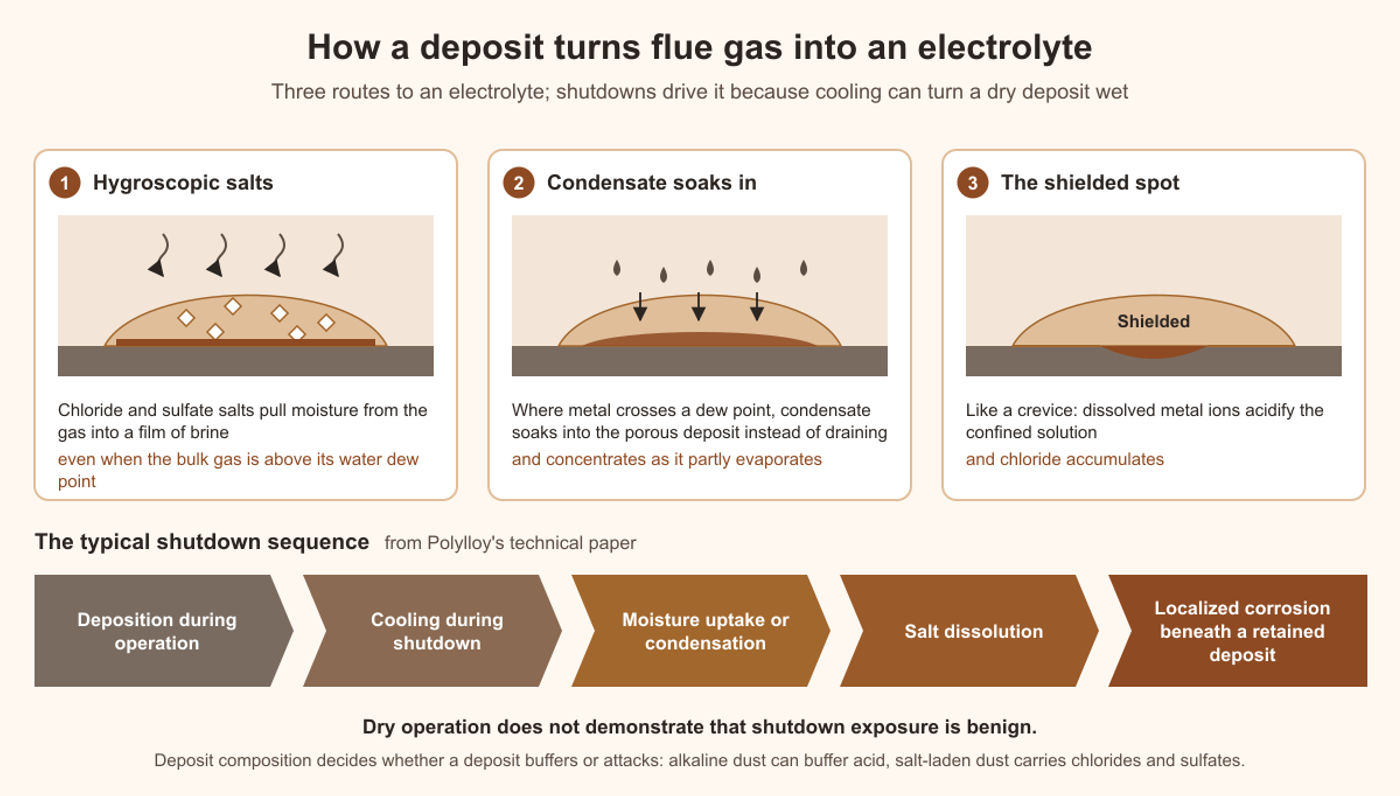
- Deposits turn gas into an electrolyte three ways: hygroscopic salts pull moisture from the gas, condensate soaks into the deposit and concentrates, and the shielded spot acidifies.
- Polylloy's technical paper traces the typical sequence: deposition in operation, cooling at shutdown, moisture uptake, salt dissolution, then localized corrosion beneath the retained deposit.
- It appears on duct floors and ledges, in baghouse hopper valleys and on plates, and on kiln shells beneath refractory, where corrosive species accumulate at the steel interface.
- Confirm it by sampling deposits before cleaning, matching pits and thinning to the deposit footprint, and measuring pit depth, not only average loss.
- Remove the conditions first, then protect the steel: FlueGard®-225SQC for baghouses and ducts to 225 °C, KilnGard®-600SCW beneath kiln refractory to 600 °C.
Under-deposit corrosion is localized attack on steel beneath retained dust, ash or salt, where the deposit holds moisture and concentrates acids and chlorides against the metal. It thins duct floors, baghouse hoppers and kiln shells beneath refractory, in ducts and baghouses often during shutdowns, and is controlled by removing the deposit conditions and protecting the exposed steel.
Under-Deposit Corrosion Defined
Under-deposit corrosion has its own mechanism and its own locations, which is why it is diagnosed separately from general acid attack.
What Makes Under-Deposit Corrosion Different
Under-deposit corrosion is localized corrosion of steel beneath a retained deposit of dust, ash, scale or salt, where the deposit holds moisture, concentrates acids and chlorides and shields the metal, so the steel under it corrodes faster than the open surface around it.
Acid dew point corrosion follows cold metal, as described in the acid dew point warning signs; under-deposit corrosion follows the deposit, because the deposit creates its own local chemistry. Polylloy's technical paper on stainless steels and claddings puts it plainly: bulk flue-gas chemistry may not describe the environment at the metal surface.
Where Under-Deposit Corrosion Matters Most
Under-deposit corrosion matters most in three places, each covered below:
- Flue gas ducts.
- Baghouse hoppers, plates and casings.
- Kiln shells beneath refractory.
Flue gas desulfurization (FGD) absorbers and slurry systems have their own under-deposit behavior, covered in FGD corrosion protection, which notes that the pH under a deposit can fall far below the bulk slurry pH.
How Deposits Turn Flue Gas Into an Electrolyte on Steel
Deposits turn flue gas into an electrolyte on steel by three routes, and the deposit's composition decides whether any of them starts.
Hygroscopic and Deliquescent Salts
Chloride and sulfate salts in dust and ash can absorb water from the gas and dissolve into a film of brine. An electrolyte can therefore form on steel even when the bulk gas is above its water dew point. Calcium chloride from lime-based gas cleaning and other sorbent deposits are a known case of this behavior.
Condensate Soaking Into the Deposit
Where metal crosses the acid or water dew point, condensate soaks into the porous deposit instead of draining. As it partly evaporates, acids and salts stay behind and concentrate, and repeated cycles build a more aggressive layer against the steel.
The Shielded Spot as a Crevice
A deposit shields the steel beneath it in the same way an overlap or fastener does. Polylloy's technical paper describes how a pit or crevice becomes more aggressive as dissolved metal ions acidify the confined solution and chloride accumulates, and notes that shielded crevices at deposit-covered areas can sustain localized attack.
When Dust Protects and When It Attacks
Polylloy's May 2026 International Cement Review (ICR) article notes that on the dirty side of a cement baghouse, alkaline dust deposits can partly neutralize acidic condensate. Deposit composition therefore decides whether a deposit buffers or attacks: alkaline dust can buffer acid, while salt-laden dust carries chlorides and sulfates to the steel.
Why Shutdowns Drive Under-Deposit Corrosion
Shutdowns drive under-deposit corrosion because cooling can turn a dry deposit into a wet one.
The Shutdown Sequence
Polylloy's technical paper gives the typical sequence: deposition during operation, cooling during shutdown, moisture uptake or condensation, salt dissolution, and localized corrosion beneath a retained deposit. Severity depends on deposit composition and local surface conditions, and dry operation does not demonstrate that shutdown exposure is benign.
Polylloy's coal mill baghouse case study describes the same exposure in service. During start-up, shutdown, low-temperature operation and process upsets, moisture can combine with acidic flue-gas species and deposited dust to form aggressive condensates directly on steel, as steel temperatures pass through the water and acid dew points.
What This Means for Records
Log shutdown frequency and duration alongside thickness data. The technical paper lists them, with deposits, condensates, minimum wall temperatures and cleaning practice, as the measurements that say more than a material name or a bulk gas temperature.
Under-Deposit Corrosion in Flue Gas Ducts
Under-deposit corrosion in flue gas ducts concentrates wherever gas slows and dust settles.
Where Deposits Settle in Ducts
Deposits settle in five typical duct locations:
- Duct floors and horizontal runs.
- Low-velocity pockets.
- Internal ledges and horizontal stiffener faces.
- Expansion joint pockets.
- Crevices at welds, overlaps and fasteners.
Designing out dead zones is covered in the flue gas ductwork design rules.
Protecting Duct Steel Under Deposits
FlueGard-225SQC is a two-component polymeric alloy listed for ducts in cement plants and waste incinerators, rated to 225 °C (437 °F), and resistant to sulfur trioxide (SO3), sulfur dioxide (SO2), hydrogen chloride (HCl), carbon dioxide (CO2), hydrogen fluoride (HF) and nitrogen oxides (NOx). It works as a barrier on the steel, not as a means of preventing or shedding deposits.
The bulletin reports one-week immersion weight gain below 1.0 % in 37 % HCl and below 0.5 % in 36 % sulfuric acid, tested to ASTM International method D471, and Polylloy lists it as an immersion grade. These are acid immersion data, not an under-deposit test. Grade data are on the FlueGard flue gas coatings page.
Under-Deposit Corrosion in Baghouse Hoppers, Plates and Casings
Under-deposit corrosion in a baghouse often concentrates in hoppers, with casing and plate zones also exposed.
Baghouse Zones Where Deposits Sit
Deposits sit on hopper walls and valleys, discharge throats and stiffeners under caked or bridging dust, on dirty-side tubesheet edges, in casing corners and door frames, and on perforated plates where fitted. Damp hopper dust is a recognized warning sign, and zone-by-zone outage checks are in the baghouse corrosion maintenance checklist.
Hopper Practice That Feeds Deposits
Dust left in hoppers through a shutdown, failed hopper heating or insulation, and leaking discharge valves that draw in cold air all keep deposits damp against the steel. Evacuate hoppers before long outages where practical, and restore heating and insulation first.
Baghouse Evidence
FlueGard-225SQC is listed for baghouses in cement plants and waste incinerators. FlueGard on coal mill baghouses at three cement plants in Mexico was inspected after about 20, 15 and 16 years, with no issues observed, excellent condition and excellent performance reported; only the 2008 unit is specifically FlueGard-225SQC.
That record is service history in an environment the study itself describes as carrying deposited dust. It is not an under-deposit test.
Under-Deposit Corrosion on Kiln Shells Beneath Refractory
Under-deposit corrosion on kiln shells beneath refractory is the hardest case to see, because the lining hides it.
What Causes Cement Kiln Shell Corrosion Beneath Refractory
Cement kiln shells corrode beneath refractory because corrosive species pass through the lining and attack the cooler shell under deposits. The ICR article describes alkalis, chlorides, sulfates, moisture and acid-forming gases (HCl, SO3, HF) penetrating the refractory and accumulating at the steel interface, where local temperature gradients promote condensation and aggressive phases.
Polylloy's KilnGard-600SCW Mexico case study states that corrosion under deposits drives shell thinning and localized hot spots, and that damage can advance out of sight before an outage finds it. Gas paths, anchors and reline steps are covered in corrosion behind refractory linings.
Coating the Kiln Shell Against Under-Deposit Attack
KilnGard-600SCW is a two-component nano-ceramic composite applied to the blasted shell at reline, before the refractory goes in, for cement and lime kilns, rated to 600 °C (1,112 °F). The ICR article describes it as designed to maintain a continuous barrier on the steel surface, withstand refractory contact and reduce corrosion under the refractory. It is typically renewed with refractory replacement.
In the Mexico study, the 20 to 26 m section, measured at 1 m intervals, lost more than 1.3 mm in 11 months uncoated and showed no measurable loss over a further 12 months with KilnGard-600SCW; results are project-specific. Final heat cured activation is completed during kiln start-up using process heat, and certified partners apply the coating while Polylloy specifies and supervises.
Soluble salt deposits must be removed fully before coating, because chlorides left under a coating keep working on the steel; sampling at the shell face is part of the kiln shell inspection checklist. Product details are on the KilnGard protection beneath refractory page.
How to Recognize Under-Deposit Corrosion
Recognizing under-deposit corrosion takes five checks at an outage, in this order.
Five Checks at an Outage
- Record deposit condition before cleaning, whether damp, caked, layered or crusted, with photographs.
- Sample deposits and analyze water-soluble chlorides, sulfates and leachate acidity.
- Clean and map the steel: pits and thinning that match the deposit footprint, often with a sharp edge between attacked and clean steel, point to under-deposit attack.
- Measure wall thickness by ultrasonic testing and record pit depth, because Polylloy's technical paper notes that a low average loss can conceal a penetration risk.
- Compare the pattern with shutdown logs and minimum metal temperatures.
Attack spread over cold zones regardless of deposits points to metal temperature first, and to general acid dew point corrosion rather than under-deposit attack.
How to Remove the Conditions for Under-Deposit Corrosion
Removing the conditions for under-deposit corrosion works on four levers:
- Keep metal above the dew points where possible, with insulation, hopper heating and seal repair.
- Remove deposits before long outages and keep hoppers evacuated.
- Design out deposit traps on new or rebuilt ducts.
- Manage the shutdown itself where plant practice allows.
These measures reduce under-deposit attack but rarely remove every deposit or every cool-down, which is why exposed steel is protected as well. Where deposits stay dry and metal stays well above the dew points, a conventional coating may be enough.
Deciding When Under-Deposit Corrosion Needs a Coating
Under-deposit corrosion needs a coating when deposits cannot be kept off the steel through shutdowns. In that case, use FlueGard-225SQC for baghouses and ducts and KilnGard-600SCW for kiln shells at reline, with surface preparation to SSPC-SP10 (Society for Protective Coatings) / NACE No. 2 near-white, a profile above 3 mils (75 µm) and soluble salts removed.
To scope it, book a Coating Performance Review with any deposit analysis, equipment type, coated area, operating conditions (temperature, gas chemistry, abrasion), shutdown frequency, location and outage timing.
FAQs
What is Under Deposit Corrosion?
Under-deposit corrosion is localized attack on steel beneath retained dust, ash, scale or salt. The deposit holds moisture, concentrates acids and chlorides and shields the metal, so the steel underneath corrodes faster than the open surface around it. In flue gas ducts and baghouses it is often worst during shutdowns, when deposits absorb moisture as the steel cools.
What Coating Stops Under Deposit Corrosion on a Kiln Shell?
KilnGard-600SCW is applied to the blasted kiln shell at reline, before the refractory goes in, for cement and lime kilns, rated to 600 °C. It is designed to keep a continuous barrier on the steel beneath the deposits that build up behind the lining. In a Mexico study, a coated section showed no measurable loss over 12 months; results are project-specific.
What Causes Cement Kiln Shell Corrosion Beneath Refractory?
Alkalis, chlorides, sulfates, moisture and acid gases such as hydrogen chloride and sulfur trioxide pass through the refractory and collect at the cooler steel shell. Temperature gradients there drive condensation and corrosion under deposits, which thins the shell, causes hot spots and weakens the bond between lining and steel, usually out of sight until a reline.
Why Do Baghouse Hoppers Corrode Under the Dust?
Dust left in a hopper concentrates soluble salts and holds moisture against the steel, especially when the hopper cools at shutdown or its heating and insulation fail. The covered steel can become a shielded, acidic spot that corrodes faster than the walls around it. Evacuate hoppers before long outages and restore heating before considering a coating.
Can Under-Deposit Corrosion Happen Above the Acid Dew Point?
Yes. Hygroscopic chloride and sulfate salts in a deposit can absorb moisture from the gas and form a corrosive brine even when the bulk gas sits above its dew points. That is why a duct or hopper can corrode under deposits although the calculated dew point says the steel should stay dry.
How Do You Tell Under-Deposit Corrosion from General Acid Corrosion?
Look at the pattern after cleaning. Under-deposit corrosion follows the deposit footprint, with pits and often a sharp edge between attacked and clean steel, while general acid dew point corrosion follows cold zones such as stiffeners and doors. Sample the deposit before cleaning and record pit depth, since average thickness can hide deep local attack.
Does Cleaning Out Deposits Stop Under-Deposit Corrosion?
Cleaning reduces it but rarely ends it. New deposits form in operation, and every shutdown gives them another chance to absorb moisture, so combine deposit removal with hopper heating, insulation and seal repair, and protect steel that still holds deposits through cool-downs. Remove soluble salts fully before coating, or they keep working beneath the new film.

Edita Rojasova
Co-founder and Chief Technology Officer, Polylloy Coatings
Edita Rojasova is co-founder and Chief Technology Officer of Polylloy Coatings, Inc., which develops hybrid polymer-alloy-ceramic technologies that protect industrial equipment in extreme environments against high-temperature corrosion, chemical attack, and abrasion. A materials scientist educated at the Slovak University of Technology in Bratislava, she holds a master’s degree in chemical engineering and fuel processing and a PhD in organic technology, with a focus on catalysis and the modification of inorganic substrates. She brings expertise in both organic and inorganic chemistry, integrating the two into true hybrid protective systems. Her specializations include electrochemistry, corrosion mechanisms of metallic substrates, and the chemistry of the substrate–coating interface. An inventor with multiple U.S. patents, she leads Polylloy’s R&D, guiding new formulations from testing and characterization through to field implementation.
Related Signals
Dry Sorbent Injection and Corrosion: Hygroscopic Deposits in Baghouses and Ducts
Edita RojasovaSat, Nov 7, 2026
Ammonia Slip After SNCR or SCR: Ammonium Salt Corrosion in Ducts and Baghouses
Edita RojasovaFri, Nov 6, 2026