Wear Resistant Coatings for Cyclones, Chutes and Hoppers
 Surjit GillLast Updated: Oct 6, 2026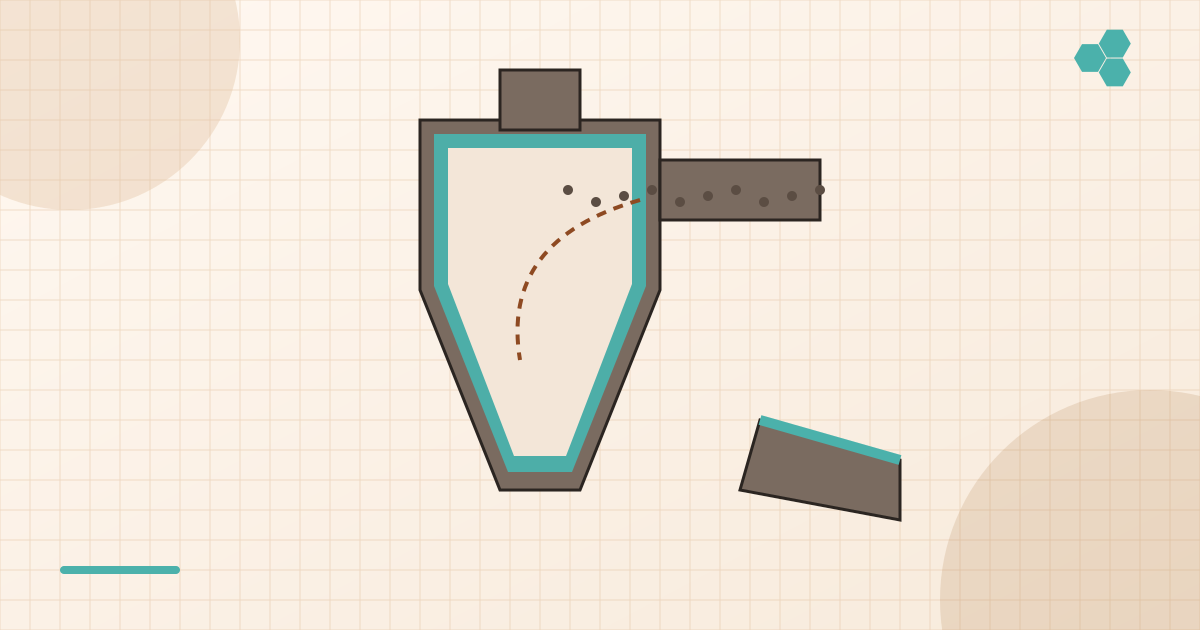
Wear Resistant Coatings: Key Points
- Cyclones, chutes, hoppers and transfer points wear by sliding abrasion, impact and particle erosion; heat and corrosive gas or moisture accelerate all three.
- WearGard®-625S is Polylloy's wear grade for high-abrasion equipment to 625 °C (1,157 °F): cyclones, chutes, hoppers, transfer points, separators and particulate impingement zones.
- Coatings suit complex geometry, hot service and combined abrasion-corrosion; heavy lump impact and very coarse material often still call for liner plate or ceramic tile.
- Wear coating life depends on particle hardness, velocity, impingement angle, temperature and thickness, so set inspection-based re-coat triggers rather than relying on a life claim.
- Repair means removing damaged coating, re-blasting, preparing edges into sound coating and reapplying to the original specification; certified partners apply it under Polylloy supervision.
- FlueGard®-455CHT adds a corrosion-plus-abrasion option to 455 °C (850 °F), with Taber abrasion of 20 mg (ASTM D4060) on its bulletin.
A wear resistant coating for chutes and hoppers must match the wear mode, temperature and geometry of each zone. WearGard-625S covers cyclones, chutes, hoppers, transfer points, separators and impingement zones to 625 °C (1,157 °F), while heavy lump impact often still needs liner plate or ceramic tile.
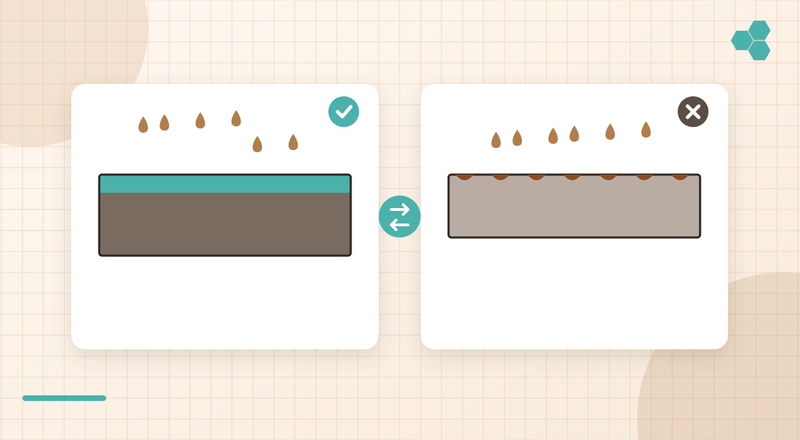
A wear resistant coating is a hard, well-bonded protective layer applied to steel to slow material loss from abrasion, impact and particle erosion.
In cyclones, chutes and hoppers, a wear resistant coating is an alternative or a complement to liner plates and ceramic tiles, and it is most useful on complex shapes and in hot service. This guide is for maintenance and reliability managers in cement, mining, power and waste-to-energy plants.
Wear Challenges in Cyclones, Chutes and Hoppers and How Coatings Address Them
Each zone of a cyclone, chute or hopper wears differently, so the protection choice is made zone by zone. The table maps the common wear zones to their dominant mechanism, the factors that make them worse, where a coating fits and what to inspect:
| Zone | Wear mode | Aggravating factors | Protection fit | Inspection focus |
|---|---|---|---|---|
| Cyclone inlet and scroll | Particle erosion | Gas velocity, heat | WearGard-625S | Thinning at scroll entry |
| Cyclone cone and dust outlet | Concentrated sliding abrasion | Dust loading, heat | WearGard-625S | Grooving near apex |
| Chute impact landing zone | High-angle impact | Lump size, drop height | Liner or tile; coat surroundings | Gouges, cracked liners |
| Chute sliding sections | Sliding abrasion | Flow rate, moisture | WearGard-625S | Polished, thinned steel |
| Hopper walls and valleys | Sliding abrasion plus corrosion | Condensation on cool walls | WearGard-625S or FlueGard-455CHT | Valley corners, welds |
| Transfer points and skirts | Impact and sliding | Spillage, misalignment | Coating plus liners | Skirt edges, landing face |
| Separators | Particle impingement | Velocity, flow direction changes | WearGard-625S | Vanes, housings, bends |
| Fan housings | Particle impingement | Dust-laden gas, corrosion | WearGard-625S; FlueGard-225SQC where corrosion leads | Scroll and cut-off |
One row is deliberately not "coat it": chute landing zones that take heavy lump impact. Fan housings are a listed application, but rotating impellers need confirmation before any coating is specified. The broader set of Polylloy systems is listed under Polylloy corrosion and wear protection solutions.
Why Cement Cyclones and Mining Chutes Wear So Quickly
Cement cyclones and mining chutes wear quickly because they move large volumes of hard material continuously. The mechanisms differ, and the dominant one decides which protection lasts.
Erosion in Cyclones
Cyclone erosion starts at the inlet, where dust-laden gas enters at high velocity and the centrifugal flow drives hard particles such as raw meal, clinker dust, quartz and fly ash against the scroll, vortex finder and cone. Erosion rate rises steeply with particle velocity and depends on the angle at which particles strike; a distorted inlet can change wear rates sharply.
In cement, preheater tower cyclones are normally refractory-lined, so wear coatings apply mainly to unlined steel such as dedusting, separator and coal mill cyclones, ducts and chutes, provided the operating temperature falls within the grade's listed limit. Hot gas also adds oxidation and can soften some wear materials, which is why temperature is the second filter after wear mode.
Impact and Sliding in Chutes and Hoppers
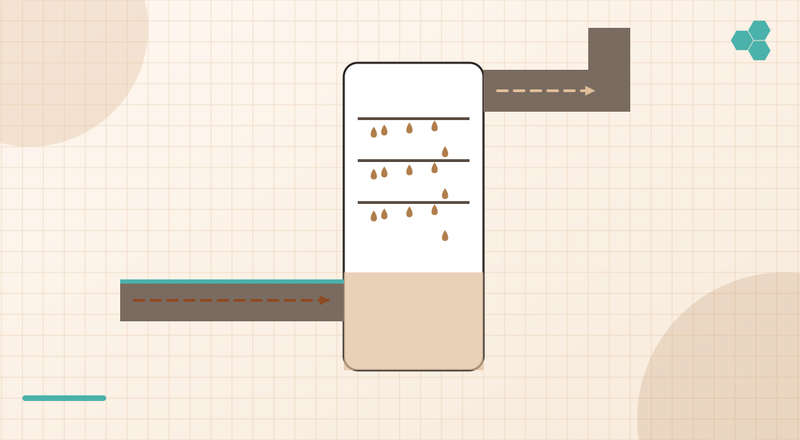
Transfer chutes see impact at the landing zone and sliding abrasion downstream; in mining, ore size, drop height and flow rate set the severity. Hoppers wear by sliding along walls and valleys, and when they run cool they also collect condensation, so corrosion joins the abrasion.
That combination, abrasion-corrosion synergy, is often what turns slow wear into fast wear. Abrasion strips the corrosion products and any protective film, exposing fresh steel to corrode, while corrosion roughens and weakens the surface so particles remove it more easily.
How WearGard-625S Protects High-Abrasion Equipment
WearGard-625S is Polylloy's grade for high-abrasion equipment in service to 625 °C (1,157 °F), and its listed scope is cyclones, chutes, hoppers, transfer points, separators and particulate impingement zones.
Scope and Service Limit
WearGard-625S is a coating rather than a bolted or bonded liner, so there are no tile joints or plate seams for particles to undercut, and a coating follows curved scrolls, cones and bends where tiles and plates are hard to fit.
WearGard-625S is applied by air spray, roller or brush over an SSPC-SP10 near-white blast with a profile above 3 mils (75 µm), and final heat cured activation is completed during start-up using process heat; keep the grade within its listed equipment and temperature limit.
When Corrosion and Abrasion Act Together
FlueGard-455CHT is the option where condensate corrosion matters as much as wear. It is a two-component ceramic corrosion and abrasion coating rated to 455 °C (850 °F), with good resistance to acidic and alkaline condensates.
Its bulletin lists Taber abrasion of 20 mg (ASTM D4060, CS-17 wheel, 1 kg load, 1,000 cycles), >1,000 psi (7 MPa) Elcometer adhesion on sandblasted carbon steel (per the FlueGard-455CHT data sheet) and Shore D hardness above 80.
Taber data is read simply: lower mass loss means better abrasion resistance under that test. Compare only results run with the same wheel, load and number of cycles, and remember that Taber is a rotary rub-abrasion test that does not reproduce high-velocity particle erosion in a cyclone.
Honest Limits
Heavy lump impact and very coarse ore usually favor liner plate, ceramic-faced rubber or tiles, although a coating can still protect the surrounding steel. Surface preparation is critical: certified partners blast and apply, while Polylloy formulates, supplies, specifies and supervises. For heat-cured grades, final heat cured activation is completed during start-up using process heat.
Wear Coatings Compared with Liner Plates, Tiles and Overlays
Wear coatings compete with four established liner classes, and each class has a wear mode where it is the practical answer.
Options by Wear Mode
The main alternatives, and where each fits, are:
- Abrasion-resistant (AR) steel plate: robust against impact; bolted or welded; heavy, and hard to fit on curves.
- Chromium carbide overlay plate: suited to severe sliding abrasion; brittle under heavy impact; installation involves welding heat.
- Alumina ceramic tile: very hard for sliding wear and erosion; tiles are lost by impact or adhesive failure.
- Ultra-high-molecular-weight polyethylene (UHMW-PE) and rubber liners: good for flow and low-temperature service, rubber for wet impact; both are temperature-limited.
What About 'Nano Ceramic' Coatings?
"Nano" describes particle size in a formulation, not a performance class. Ask any supplier for test-method data, such as Taber abrasion per ASTM D4060 with wheel, load and cycles stated and pull-off adhesion such as ASTM D4541, plus the service temperature and documented field references in comparable duty.
WearGard-625S is a nano-ceramic material, so judge it the same way: its bulletin lists Taber abrasion below 30 mg (ASTM D4060), adhesion above 1,000 psi (ASTM D4541) and Shore D hardness above 95.
How Long a Cyclone Wear Coating Lasts and How to Repair It
A cyclone wear coating has no universal life figure; any estimate needs your operating data.
Service Life Depends on Conditions
Wear rate is set by particle hardness and size, gas velocity, impingement angle, temperature, coating thickness and how often the unit starts and stops. The reliable approach is to record coating thickness after application, measure it at every outage, trend the loss rate and set a re-coat trigger well before steel is exposed.
Project-specific performance detail comes from Polylloy's technical team, based on completed projects and comparable service.
Repairing a Worn Coating in a Wear Zone
Repair starts with a wear map. Damaged and loosely bonded coating is removed back to sound material, any steel loss is repaired, and the area is re-blasted to the specified cleanliness and profile, with the edges of the intact coating prepared to the supplier's procedure. The coating is then reapplied to the original specification and thickness and inspected.
Certified partners carry out repairs under Polylloy supervision, and planning them into routine outages avoids emergency repairs.
What Maintenance Managers Can Expect from a Wear Coating Program
A wear coating program gives maintenance managers control over when wear work happens. The practical aims are fewer unplanned stops from wear-through, repairs scheduled into planned outages and less hot work on liner change-outs in complex shapes.
Cost is project-specific and depends on factors: product selection by temperature and abrasion, surface preparation and access, coated area and thickness, labor, inspection, curing, freight and outage timing. Unusual geometry or mixed liner-and-coating designs fall under custom coating applications.
Fans need care. WearGard-625S lists industrial fans among its applications and StackGard®-255SQW covers fans for corrosion service to 255 °C; at a French cement plant, FlueGard-225SQC has protected a fan housing exposed to HF, HCl and high-velocity dust for about 24 months. Rotating impellers still need Polylloy confirmation before specifying.
Where hopper damage is corrosion-led rather than wear-led, a corrosion-resistant lining matters more than wear resistance. At the SUEZ Taden Incinerator in France, a hopper coating application has been proposed, supported by a comparable sister-plant reference; it is a proposal, not a completed result.
Choosing Wear Protection for Cyclones, Chutes and Hoppers
Wear protection works when it is chosen per zone. Identify the wear mode and temperature in each area, use coatings for complex geometry, hot abrasion and abrasion-corrosion, use plates or tiles where heavy lumps strike, and expect many units to need both. Units running hotter than most organic systems allow need a high-temperature grade matched to the service limit.
To get a zone-by-zone recommendation, request a coating evaluation and share the equipment type, coated area, material handled, operating temperature, location and timing.
FAQs
What is the Right Coating for Chutes and Hoppers?
The right coating depends on wear mode and temperature. For sliding abrasion and particle erosion on complex shapes, a wear resistant coating such as WearGard-625S, rated to 625 °C (1,157 °F) for chutes, hoppers, cyclones and transfer points, is a practical option. Heavy lump impact at chute landing zones often still needs liner plate or ceramic tile, with coating on the surrounding steel.
Why Do Cement Cyclones Wear Out So Quickly?
Cyclones accelerate dust-laden gas and spin hard particles such as raw meal, clinker dust and quartz against the inlet scroll, vortex finder and cone. Erosion rises steeply with particle velocity and depends on impact angle, while heat and acid gas weaken protective layers. Continuous high throughput means wear accumulates quickly between outages.
How Long Does a Cyclone Wear Coating Last?
There is no universal figure: life depends on particle hardness and size, gas velocity, impingement angle, temperature, coating thickness and how often the unit cycles. Record thickness after application, measure at every outage, trend the loss rate and re-coat before steel is exposed. Polylloy's technical team provides project-specific performance detail.
How Do You Repair a Worn Coating in a Wear Zone?
Remove damaged and loosely bonded coating back to sound material, repair any steel loss, re-blast to the specified cleanliness and profile, prepare the edges of intact coating, then reapply to the original specification and thickness and inspect. Certified Polylloy partners carry out the repair under Polylloy supervision, ideally within a planned outage.
Are Nano Ceramic Coatings Worth It for High Wear Transfer Areas?
Judge any coating by test data and service record, not the "nano" label. Ask for Taber abrasion results (ASTM D4060) with wheel, load and cycles stated, adhesion values, service temperature and field references in similar duty. FlueGard-455CHT, for example, lists 20 mg Taber abrasion and adhesion above 1,000 psi (7 MPa) on its bulletin.
Is a Coating or a Liner the Right Choice for Mining Transfer Chutes?
Each suits different zones: liner plate, chromium carbide overlay and ceramic-faced rubber handle heavy lump impact at landing zones. Wear coatings suit sliding sections, curved or complex surfaces and hot service where polymer liners cannot run. Many chutes combine both: liners where rock lands, coating where material slides and on surrounding steel.

Surjit Gill
Co-founder, Polylloy Coatings
Surjit Gill is co-founder of Polylloy Coatings, which develops innovative hybrid coatings to protect industrial equipment against high-temperature corrosion, chemical attack, and abrasion in severe-service applications worldwide. Trained in chemical engineering and business management, he brings leadership experience spanning startup incubation and business growth. He focuses on commercializing materials innovation, scaling organizations, and advancing go-to-market strategy through global partnerships.
Related Signals