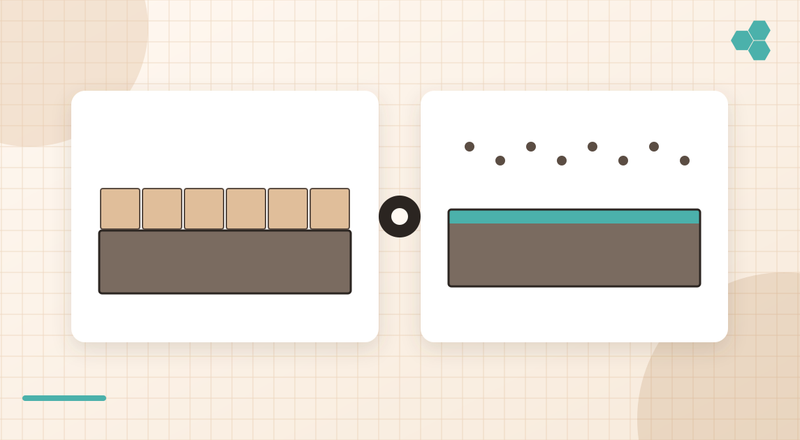
Shop-Applied vs Field-Applied Coatings for New Ducts and Stacks
 Surjit GillLast Updated: Oct 27, 2026

Shop vs Field Coating: Key Points
- Shop application coats sections before shipping and assembly; field application coats them after erection on site. Polylloy's May 2026 International Cement Review (ICR) article names a third route for stacks: replacement sections on the ground.
- Shop coating gives full access, sheltered blasting and controllable humidity, and the film is inspected before anything hides the steel; field coating gives a continuous film across the joints and avoids transport damage.
- Most shop-coated projects still need field work at the weld joints between sections and repairs to handling damage, so plan both from the start.
- Certified Polylloy partners apply in both settings; Polylloy formulates, supplies, specifies, trains applicators and supervises against an inspection and test plan (ITP).
- For heat-cured grades, final heat cured activation is completed during start-up using process heat; CorrosionGard®-160S cures at ambient.
- Cost is project-specific: the setting changes access, mobilisation, freight, inspection and shutdown timing, not the need for SSPC-SP10 preparation.
Coat new ducts and stacks in the shop when sections can be blasted, coated and inspected under cover before shipping, and in the field when sections are site-fabricated, too large to handle coated, or when joints need finishing after erection. Either way, certified Polylloy partners apply the coating and Polylloy specifies and supervises against agreed hold points.
Quick Verdict: Shop-Applied or Field-Applied Coating for New Ducts and Stacks
Shop application wins on access, condition control and inspection before anything hides the steel, and it takes coating off the outage critical path. Field application wins where sections are site-built or very large, where transport and lifting would damage the film, and at the joints every shop-coated project still has.
Most new projects use both: shop-coat the sections, field-coat the joints.
Shop-Applied and Field-Applied Coatings Compared Side by Side
The table compares the two settings factor by factor for new duct and stack sections; the coating and its specification are the same in both.
| Factor | Shop-applied | Field-applied |
|---|---|---|
| Where work happens | Fabrication shop or covered area | On site after erection |
| Access to steel | Full, every section interior | Scaffold, rope or internal access |
| Blasting environment | Sheltered, contained | Containment built on site |
| Humidity and dew point control | Controllable | Enclosure, heating or dehumidification |
| Inspection before hidden | Before shipping or lining | Before start-up |
| Schedule position | Fabrication schedule | Construction or outage schedule |
| Weld joints between sections | Coated on site after welding | Coated with the run |
| Handling and transport damage | Risk; repair on site | None from transport |
| Who applies | Certified Polylloy partner | Certified Polylloy partner |
| Who supervises | Polylloy, against the ITP | Polylloy, against the ITP |
| Pricing | Project-specific | Project-specific |
What Shop-Applied and Field-Applied Coating Mean for Duct and Stack Steel
The two terms describe where the coating goes on, not what the coating is.
Definitions
A shop-applied coating is a protective coating applied to duct or stack sections in a fabrication shop or covered area before shipping and assembly. A field-applied coating is applied on site after the sections are erected, including the joints between shop-coated sections.
The ICR article by Surjit Gill and Edita Rojasova lists three routes for stacks: inside an existing stack as part of maintenance, on replacement sections on the ground, or on newly manufactured sections prior to assembly. This page compares the new-build routes; existing stacks are covered in industrial chimney and stack corrosion options.
Same Coating, Same Preparation Standard
The setting does not change the specification. Polylloy bulletins call for abrasive blasting to SSPC-SP10 / NACE No. 2 near-white with a profile above 3 mils (75 µm).
The bulletins also print application conditions: steel 10 to 50 °C, relative humidity (RH) below 90%, and steel at least 5 °C above the dew point. The FlueGard-455CHT data sheet lists none, so confirm per project. The preparation sequence is set out in the coating outage planning steps.
When to Choose Shop-Applied Coating for New Ducts and Stacks
Shop-applied coating suits projects where the sections can travel and the schedule has room between fabrication and shipping.
Where Shop Application Fits
Shop application fits new or replacement duct and stack sections that can be transported and lifted, a fabricator with covered space, and a project schedule that allows coating between fabrication and shipping.
Polylloy's published view sets out the control advantages. Every section interior is fully accessible, blasting is sheltered, humidity can be controlled, the coating is inspected before anything hides the steel, and none of the work sits on an outage critical path.
Timing matters as much as the setting. In Polylloy's experience the design stage is where the coating is easiest to add; once the fabrication schedule is fixed, it is the step most easily squeezed out. The design-stage decisions that go with it are covered in flue gas ductwork design rules.
Refractory-Lined Sections and Two References
Refractory-lined stacks must be coated before the lining goes in, which makes the shop the natural route; the sequence is described in coating a refractory-lined stack before the lining goes in.
For an Exxon Canada refractory-lined stack, KilnGard®-600SCW was applied in the shop in June 2026 to the internal steel of 18 prefabricated sections, before refractory installation and final assembly. This is an application-stage reference: photographs document placement and coverage, and no in-service performance is claimed.
At PPL Brunner Island, Pennsylvania, StackGard®-255SQW was the selected system for new flue gas desulfurization (FGD) ducting in 2009. New duct construction allowed protection to be incorporated before service exposure; the record does not say whether the coating was shop- or field-applied.
Grades Commonly Specified for New Sections
Grades for new duct and stack sections are chosen by service limit:
- StackGard-255SQW: to 255 °C (491 °F) for steel stacks, chimneys, ducts and fans.
- FlueGard®-225SQC: to 225 °C (437 °F); its bulletin lists ducts and chimneys in power plants and refineries.
- CorrosionGard-160S: to 160 °C, ambient cure, listed for structures, vessels and tanks; use on a stack is confirmed per project.
- KilnGard-600SCW: to 600 °C beneath refractory.
The stack grades are described on the StackGard steel stack coatings page.
When to Choose Field-Applied Coating After Erection
Field-applied coating suits sections that cannot be coated before they reach site, or projects where the shop route does not fit the schedule.
Where Field Application Fits
Field application fits sections fabricated or welded on site, and sections too large or flexible to transport and lift without damaging a finished film. It also suits ducts where most of the surface is weld seam and transition, and projects where the fabrication schedule cannot absorb a coating step.
Field application keeps the protected surface continuous across joints, because the run is blasted and coated after welding is complete.
What Field Application Has to Solve
Field work needs access at every elevation inside a standing stack or duct, by scaffold, rope access or internal platforms, plus blasting containment and abrasive handling on site. It also has to hold the bulletin conditions through every shift, in weather the shop would shelter, so plan enclosure, heating or dehumidification.
Field work usually sits on the construction or outage critical path, whereas coating sections on the ground moves work out of the outage. FlueGard-455CHT needs two coats, which adds a second application pass in either setting; most other grades are single-coat.
Field Weld Joints and Handling Damage on Shop-Coated Sections
Shop coating never removes field work entirely, so joints and handling damage need a plan of their own.
Field Weld Joints Between Sections
Shop coating normally stops short of the joints that will be welded on site, and those bands are prepared and coated in the field after welding. Plan how field weld joints between sections will be prepared and protected, and confirm the method with Polylloy.
In flue gas service, missed defects tend to surface first at welds, edges and stiffeners, which is why the joint coating gets its own hold point.
Lifting, Transport and Storage
Write protection of coated sections during lifting and transport into the ITP as a hold point. After handling, inspect the film for thickness and integrity and recoat any defect. Record handling damage per section on arrival, and repair it to the project repair procedure before erection or lining.
Who Applies and Who Supervises Shop and Field Coating Work
The application model is the same in both settings.
Partners Apply in Both Settings
Certified Polylloy partners apply the coating, at the fabricator's shop or another covered area and on site. Polylloy formulates and supplies the coating, writes the specification, trains applicators and supervises, through a network of 15 partners in 22 countries.
Raise a preferred fabricator or site contractor at the evaluation stage; whether another contractor can take part, and in what role, is decided by Polylloy for the specific job. The partner model is explained in industrial coating contractors: who applies, who supervises.
Supervision Against One Inspection and Test Plan
Polylloy supervises in both settings. The exact scope, including which stages are witnessed and what is documented, is agreed per project and written into an ITP.
Typical hold points are after blasting, after each coat, at joint coating, and at pre-lining or pre-start-up release. Polylloy's inspection and maintenance services include condition assessment and thickness and continuity verification.
Heat-Cure Activation and Ambient Cure
Heat-cured and ambient-cure grades finish differently.
How Heat-Cured Grades Are Activated
Final heat cured activation is completed during start-up using process heat. On refractory-lined stacks, the refractory supplier's own dry-out requirements still apply. CorrosionGard-160S cures at ambient, so no start-up heat is needed for that grade.
What Drives Cost for Shop-Applied and Field-Applied Coating
Pricing depends on the operating environment, selected coating system, equipment condition, project size, and application requirements.
Cost Factors, Not Prices
The factors that shift with the setting are these:
- Access and surface preparation.
- Coated area, thickness, coverage and losses.
- Application labour, inspection, curing and mobilisation.
- Freight, duties and delivery of material and of coated sections.
- Shutdown requirements and project timing.
Field joint coating and handling repairs belong in the shop-applied scope. Separate material, installed and lifecycle cost; lifecycle evaluation considers preparation, application, maintenance, downtime, and replacement alongside the initial material cost, as set out in industrial coating project cost.
How to Choose Between Shop and Field Application for Your Project
Five questions settle most shop-or-field decisions:
- Can the sections be transported and lifted without damaging a finished film?
- Does the fabricator have covered space and blasting containment?
- Can the fabrication schedule absorb the coating step?
- How many field joints will there be, and who coats them?
- Can the site hold bulletin application conditions if work moves to the field?
Mild service where a conventional coating is adequate does not need a severe-service grade in either setting. To book a Coating Performance Review, request a coating evaluation with section drawings or count, equipment type, coated area, operating conditions (temperature, gas chemistry, abrasion), fabrication and site location, and schedule.
FAQs
Should a New Steel Stack Be Coated in the Shop or in the Field?
Shop coating is usually preferred when the sections can be transported and lifted, because every interior is accessible, blasting is sheltered and the film is inspected before anything hides the steel. Field coating suits site-built or very large sections. Most projects still coat the field weld joints on site after erection, so plan both.
Can Our Own Contractor Apply a Polylloy Coating?
Certified Polylloy partners apply Polylloy coatings, in the shop and in the field. If you have a preferred fabricator or site contractor, raise it at the evaluation stage; Polylloy decides for the specific job whether another contractor can take part and in what role. Polylloy specifies and supervises the work in every case.
Will Polylloy Supervise the Coating Work on Site?
Yes. Polylloy formulates and supplies the coating, writes the specification, trains the applicator and supervises, whether the work happens in a fabrication shop or on site. The supervision scope, including which stages are witnessed and what is recorded, is agreed for each project and written into an inspection and test plan with hold points.
Can Stack Sections Be Coated Before They Are Assembled?
Yes. Polylloy's May 2026 International Cement Review article lists coating newly manufactured sections before assembly as one of three routes, alongside replacement sections on the ground and coating inside an existing stack. For a refractory-lined stack the coating must go on before the lining, as on the 18 prefabricated Exxon Canada sections in 2026.
How Are Field Weld Joints Treated on Shop-Coated Duct Sections?
The joint bands are normally left for the field: after the sections are welded on site, a certified partner prepares and coats the joints, and they are inspected at their own hold point. Confirm the joint preparation and coating method with Polylloy at the design stage, because defects tend to appear first at welds and edges.
How is a Heat-Cured Coating Finished on New Duct and Stack Sections?
Final heat cured activation is completed during start-up using process heat. Before activation, the film can be inspected for thickness and integrity and any defect recoated. CorrosionGard-160S is the ambient-cure exception and needs no start-up heat, and on refractory-lined stacks the refractory supplier's own dry-out requirements also apply.
Does Shop-Applied Coating Cost Less Than Field-Applied Coating?
There is no general answer; pricing is project-specific. Shop work changes access, containment and inspection costs and adds freight and handling repairs, while field work adds scaffolding, site containment, condition control and outage time. Compare both on the same equipment, scope and period, separating material, installed and lifecycle cost.

Surjit Gill
Co-founder, Polylloy Coatings
Surjit Gill is co-founder of Polylloy Coatings, which develops innovative hybrid coatings to protect industrial equipment against high-temperature corrosion, chemical attack, and abrasion in severe-service applications worldwide. Trained in chemical engineering and business management, he brings leadership experience spanning startup incubation and business growth. He focuses on commercializing materials innovation, scaling organizations, and advancing go-to-market strategy through global partnerships.
Related Signals

Novolac Epoxy vs Vinyl Ester vs Hybrid Coatings for Baghouses
 Edita RojasovaSun, Sep 20, 2026