Industrial Coating Project Cost: What Drives It and How to Get a Quote
 Surjit GillLast Updated: Oct 16, 2026
Industrial Coating Cost: Key Points
- Pricing depends on the operating environment, selected coating system, equipment condition, project size, and application requirements.
- Six factor groups set the number: product selection; equipment condition, surface preparation and access; area, thickness, coverage and losses; labor, inspection, curing and mobilization; freight, duties, taxes and delivery; shutdown timing.
- Material, installed and lifecycle cost are three different numbers; quotations should separate them and list exclusions.
- Lifecycle evaluation considers preparation, application, maintenance, downtime, and replacement alongside the initial material cost, on the same equipment, conditions, scope and period.
- A usable quote request carries equipment type, substrate, coating history, gas composition, temperature range and peaks, coated area, location and outage timing.
- Polylloy Coatings quotes per project; certified partners price the application with their local costs.
Industrial coating cost is set by six factor groups: product selection by temperature, chemistry, corrosion and abrasion; equipment condition, surface preparation and access; coated area, thickness, coverage and losses; labor, inspection, curing and mobilization; freight, duties, taxes and delivery; and shutdown timing. Polylloy Coatings quotes each project on those factors.
Industrial coating cost is the total spend to protect plant equipment with a coating system. It is made up of material cost, installed cost and lifecycle cost, and each answers a different question.
What Determines Industrial Coating Cost
Pricing depends on the operating environment, selected coating system, equipment condition, project size, and application requirements.
Six Factor Groups Behind Every Quotation
Every industrial coating quotation is built from the same six factor groups:
- Product selection by temperature, process chemistry, corrosion and abrasion.
- Equipment condition, surface preparation and access.
- Coated area, specified thickness, coverage and application losses.
- Application labor, inspection, curing and mobilization.
- Freight, duties, taxes and delivery location.
- Shutdown requirements and project timing.
Each group is explained below, followed by the cost definitions, a lifecycle method and the data a quotation needs.
Why There is No Price List
Polylloy provides project-specific quotations and publishes no product prices, budget ranges or per-area figures. The installed cost of the same grade changes from job to job, because the factor groups above change from site to site. Certified partners use their own local costs for labor and for any numerical comparison.
Product Selection by Temperature, Chemistry, Corrosion and Abrasion
Product selection comes first, because the grade sets much of what follows.
The Grade is Chosen by Service, Not by Price
Selection follows continuous and peak temperature, gas or process chemistry, condensation, immersion and abrasion. The chosen grade then sets film build, the number of coats and the cure route.
Polylloy formulates five families: CorrosionGard®, FlueGard®, StackGard®, KilnGard® and WearGard®. Service limits for each grade are listed under corrosion protection solutions, so they are not repeated on a cost page.
Under-specifying a grade risks early repair, unplanned outages and premature equipment replacement. Where service is mild, a conventional coating is enough and a severe-service grade is not needed.
Equipment Condition, Surface Preparation and Access
Equipment condition, surface preparation and access often decide how many hours the partner spends before any coating is applied.
Condition and Preparation
Polylloy grades call for abrasive blasting to SSPC-SP10 / NACE No. 2 near-white metal, the Society for Protective Coatings (SSPC) standard, with the profile each bulletin specifies. Heavily corroded, pitted or previously coated steel needs more removal, repair and cleaning before that standard is met.
Soluble salt testing, dust removal and recorded cleanliness add steps where the specification calls for them. Each step is part of the quality record for the project.
Access
Access shapes labor hours and outage time. The main access items are:
- Scaffolding, rope or platform access.
- Confined-space entry and containment of blast media.
- The refractory removal sequence in kilns.
- Heat sinks, fins and flanges that complicate coverage.
Coating new steel on the ground or before assembly, where the design allows, changes the access picture for stacks and ducts.
Coated Area, Specified Thickness, Coverage and Application Losses
Coated area, specified thickness, coverage and losses together set the quantity of material to ship.
From Square Meters to Material Quantity
Material quantity follows the coated area multiplied by the specified dry film thickness, divided by the bulletin's coverage at that thickness, plus application losses. The arithmetic is simple; the inputs are where quotations differ.
Losses rise with complex geometry, stiffeners, wind, spray method and surface profile. Brush and roller on small items behave differently from spray on flat duct walls.
An accurate area takeoff from drawings narrows the quotation. A rough estimate becomes a contingency.
Application Labor, Inspection, Curing and Mobilization
Application labor, inspection, curing and mobilization are the site costs that sit around the material.
Labor and Number of Coats
Certified partners price labor with local rates, while Polylloy specifies, trains and supervises. Several bulletins give single-coat film builds, while FlueGard-455CHT needs two coats, and every extra coat adds a visit, an inspection and outage time, as the coating outage planning steps show.
Inspection and Supervision
Inspection and test plan hold points, film thickness checks and holiday testing where specified carry their own cost. Ask whether supervision is included or itemized; the article on industrial coating contractors sets out what an application quotation should list.
Curing and Mobilization
Cure energy is a cost factor. For heat-cured grades, final heat cured activation is completed during start-up using process heat, while external heat adds equipment and energy where process heat cannot be used. CorrosionGard-160S cures at ambient temperature.
Mobilization covers crew travel and blasting and spray equipment. It also covers dehumidification or heating needed to hold application conditions.
Freight, Duties, Taxes and Delivery Location
Freight, duties, taxes and delivery location turn a material price into a delivered cost.
Shipping Coatings to Site
Export shipments can be prepared on compliant export pallets or heat-treated wood pallets when required. Polylloy staff hold hazardous-material shipping training for air under the International Air Transport Association (IATA), ocean under the International Maritime Dangerous Goods (IMDG) Code and ground under the US Department of Transportation (DOT).
Freight mode, import duties, local taxes and lead time vary by country. The page on partner network countries shows which partner serves each market.
Shutdown Requirements and Project Timing
Shutdown requirements and project timing decide how the work is staffed and how the material travels.
The Outage Window Shapes the Price
A short or fixed shutdown can force extra crews, shift work or a phased scope. Late engagement can force air freight.
Early engagement lets material ship and partners plan inside the window. The full outage sequence belongs in the outage plan rather than the quotation.
Material, Installed and Lifecycle Cost Are Three Different Numbers
Material, installed and lifecycle cost are three different numbers, and a quotation is only comparable when it states which one it gives.
Definitions to Use in Every Quotation
Use these three definitions:
- Material cost: the coating material only.
- Installed cost: material plus the explicitly listed preparation, application and associated project costs.
- Lifecycle cost: initial investment plus maintenance, downtime and replacement over a stated period.
Ask for exclusions to be listed. Two quotations with different exclusions cannot be compared.
Material Price is One Line in Installed Cost
Material is one line among many in an installed cost. A lower material price that leads to early recoating or an unplanned outage can raise lifecycle cost.
How to Work Out Lifecycle Cost on a Coated Vessel
Working out lifecycle cost on a coated vessel is a structured comparison, not a single figure.
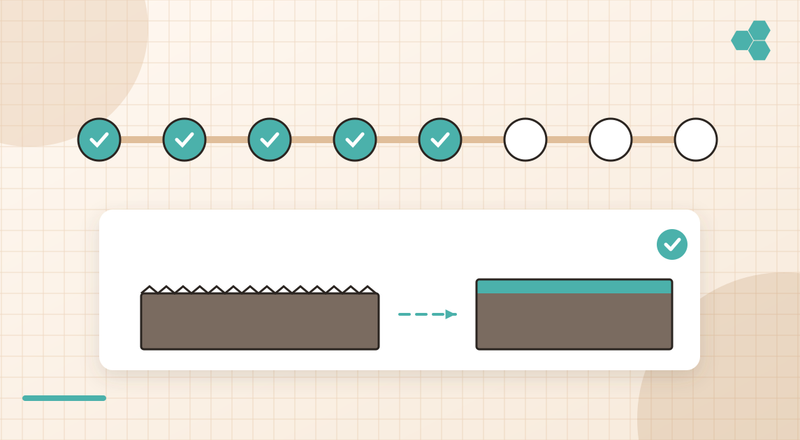
Lifecycle Cost Method in Six Steps
Follow these steps for each option under review:
- Fix the basis: the same vessel, operating conditions, scope and evaluation period.
- List initial cost per option: fabrication, surface preparation, coating material, application, inspection, cure and mobilization; for an alloy option, fabrication and installation.
- Add maintenance: inspections, local repairs and planned recoating.
- Add downtime attributable to each option, using the plant's own production figure.
- Add replacement within the period.
- Record the source and date of every assumption.
Lifecycle evaluation considers preparation, application, maintenance, downtime, and replacement alongside the initial material cost.
Rules That Keep the Comparison Honest
Service-life inputs come from documented performance in comparable service, not a brochure claim. A result from one project stays specific to that project.
Partners run numerical comparisons with their local costs. For a vessel weighed against 316 stainless, protected carbon steel may offer a cost-effective alternative to stainless steel where the coating is suitable for the specified service conditions, as the carbon steel vs stainless steel comparison explains.
What to Send to Get a Coating Quote
What to send for a coating quote follows the information Polylloy's coating evaluation asks for, and each group of answers settles a cost factor.
Quote Information, Grouped
Group the information as follows:
- Equipment: type, substrate, years in service or new build, drawings and photos; with history, this sets surface preparation.
- History: the previous coating and how it failed, and corrosion issues seen.
- Process: gas composition, normal operating temperature range, maximum peaks during upsets, and their duration and frequency; this sets product selection.
- Design details: external insulation, heat sinks, fins and flanges; these set access and coverage.
- Scope and schedule: total surface to protect, time frame available and expected project date; area sets quantity, and schedule sets crews and shipping.
- Project location: this sets freight and duties.
How This Differs from the Partner Hand-Off
These are the technical inputs behind a quotation. The roles of Polylloy, the partner and the plant, and what an application quotation should itemize, sit with the contractor guidance linked above.
Deciding When to Request a Coating Quotation
Request a coating quotation when a defined problem sits on a specific asset and a shutdown or design date is known. The site should be able to blast to SSPC-SP10 and, for heat-cured grades, use start-up process heat. If the service is mild, a conventional coating is enough.
To compare offers, use the industrial coating supplier checklist. Then request a coating evaluation and quotation with equipment type, coated area, operating conditions, location and timing.
FAQs
How Much Does an Industrial Coating Project Cost?
There is no reliable general figure, because installed cost depends on temperature, chemical exposure, abrasion, equipment condition, surface preparation and application requirements. Polylloy Coatings provides project-specific quotations rather than a price list. Share the equipment type, coated area, operating conditions, project location and timing to receive a recommendation and a quotation for your equipment.
What Determines the Cost of an Industrial Coating Project?
Six groups of factors: product selection by temperature, chemistry, corrosion and abrasion; equipment condition, surface preparation and access; coated area, thickness, coverage and losses; application labor, inspection, curing and mobilization; freight, duties, taxes and delivery location; and shutdown requirements and timing. Pricing depends on the operating environment, selected coating system, equipment condition, project size, and application requirements.
What Information is Needed to Get a Coating Quote?
Send the equipment type, substrate, age or new-build status, coating history and corrosion issues, drawings and photos, gas composition, normal temperature range, maximum peaks with their duration and frequency, insulation and heat-sink details, total surface area, available time frame, expected project date and site location. Complete data shortens the evaluation and narrows contingencies.
How Do You Work Out Lifecycle Cost on a Coated Vessel?
Fix one vessel, one set of operating conditions, one scope and one evaluation period. Add initial preparation, material, application, inspection and cure costs, then maintenance, downtime and replacement over that period, recording the source and date of each assumption. Lifecycle evaluation considers preparation, application, maintenance, downtime, and replacement alongside the initial material cost.
What is the Difference Between Material, Installed and Lifecycle Cost?
Material cost is the coating alone. Installed cost adds the listed surface preparation, application, inspection, mobilization and other project costs. Lifecycle cost adds maintenance, downtime and replacement over a stated period, and a quotation should separate the three and list its exclusions, otherwise two offers for the same equipment cannot be compared fairly.
Does the Cure Method Change the Cost of a Coating Project?
Yes, for heat-cured grades final heat cured activation is completed during start-up using process heat, so the cure fits the normal start-up; where process heat cannot be used, external heating adds equipment and energy cost. CorrosionGard-160S cures at ambient temperature and needs neither. The cure route is agreed with Polylloy's technical team when the grade is selected.

Surjit Gill
Co-founder, Polylloy Coatings
Surjit Gill is co-founder of Polylloy Coatings, which develops innovative hybrid coatings to protect industrial equipment against high-temperature corrosion, chemical attack, and abrasion in severe-service applications worldwide. Trained in chemical engineering and business management, he brings leadership experience spanning startup incubation and business growth. He focuses on commercializing materials innovation, scaling organizations, and advancing go-to-market strategy through global partnerships.
Related Signals